scenarioAerocapture
Overview
Demonstrates a spacecraft performing aerocapture. C++ Module: tabularAtmosphere is used to read in a table of atmospheric density value for the planet. A cannonball drag effector (C++ Module: dragDynamicEffector) is used to simulate the atmospheric drag force.
The script is found in the folder basilisk/examples and executed by using:
python3 scenarioAerocapture.py
Illustration of Simulation Results
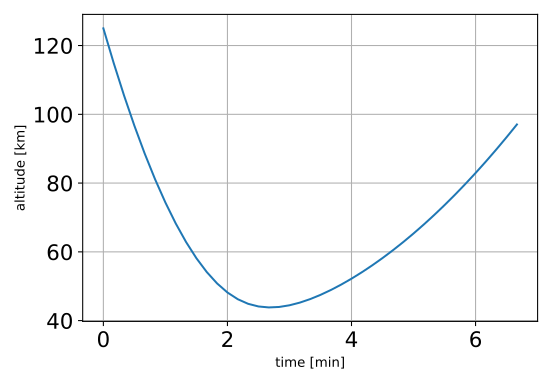
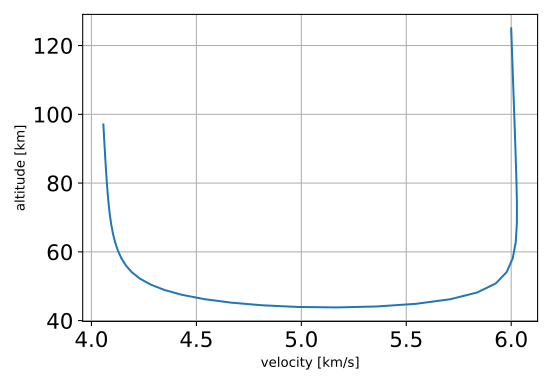
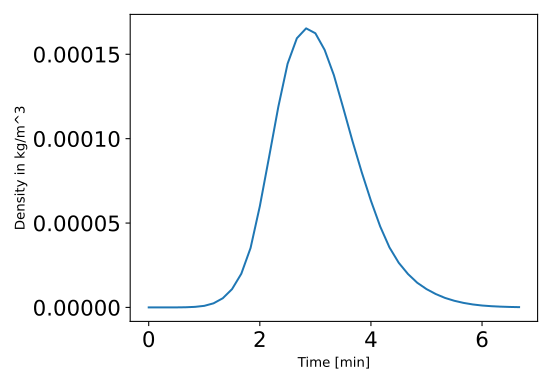
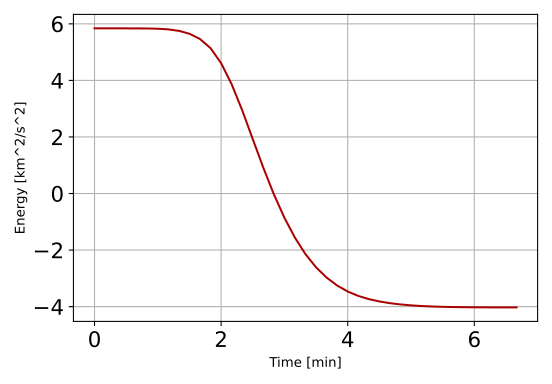
For the Earth aerocapture the following figures illustrate the simulation results. The spacecraft first dips into the atmosphere and looses orbital energy to the point of being capture by the planet. The spacecraft has enough velocity to escape the planet atmosphere at the end of the simulation time. This is also illustrated by the velocity versus altitude plot. The density plot illustrates the result of the tabular atmosphere model.
show_plots = True, planetCase = `Earth`
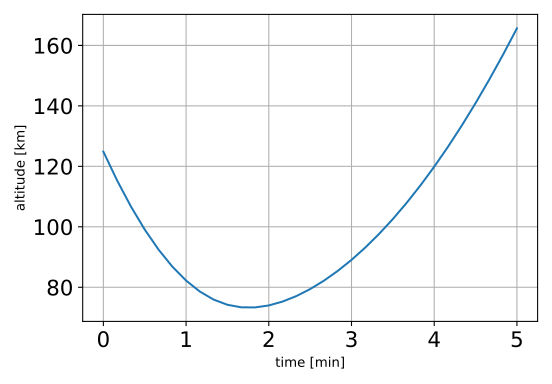
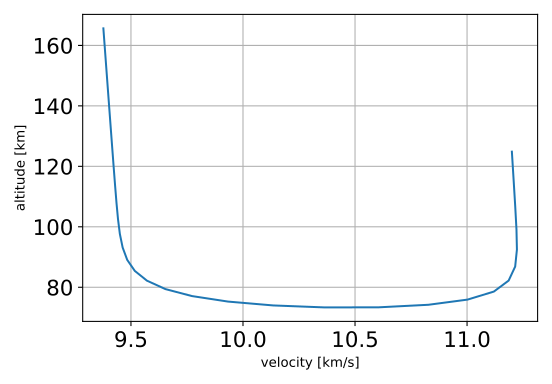
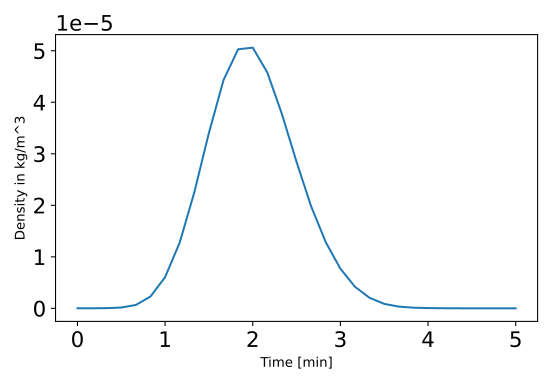
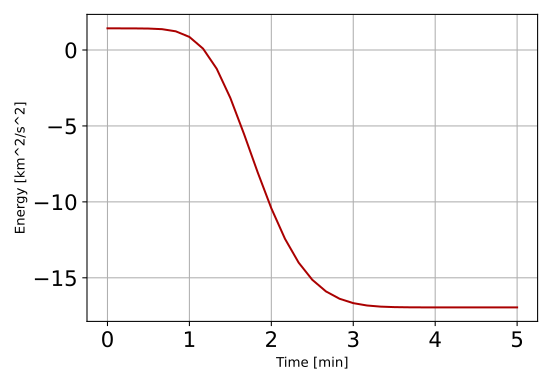
For the Mars aerocapture scenario the orbit is adjusted to be suitable for this planet scenario. Here too the spacecraft enters the atmosphere to burn off orbital energy and become captured by the planet.
show_plots = True, planetCase = `Mars`
- scenarioAerocapture.run(show_plots, planetCase, useWind=False)[source]
The scenarios can be run with the followings setups parameters:
- Parameters:
show_plots (bool) – Determines if the script should display plots
planetCase (string) – Specify if a
MarsorEartharrival is simulateduseWind (bool) – If True and
planetCase == 'Earth', link aZeroWindModelvia SPICE so drag is computed against the atmosphere-relative velocity. If False (default), or for Mars, the inertial spacecraft velocity is used directly.